
Grow Tent Odor Control and Ventilation, Explained
Last updated: July 11, 2026
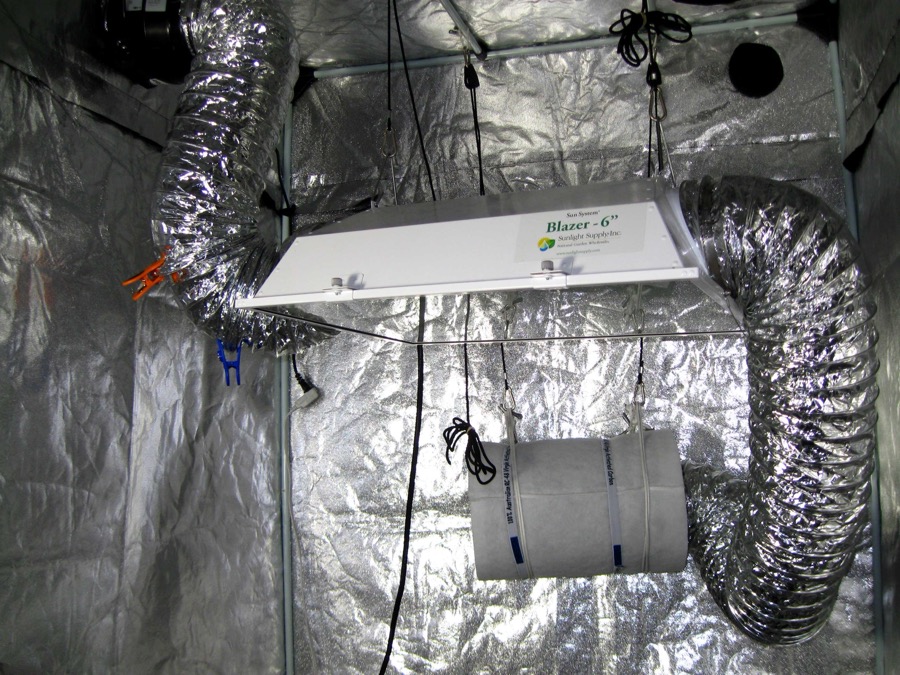
Photo by Plantlady223, licensed under CC BY-SA 4.0
Ventilation is the part of a grow tent setup people plan for last and regret not planning for first. A tent with no airflow plan turns into a hot, stagnant, humid box within a day of the lights coming on — and a hot, humid box is exactly the environment where mold, pests, and strong plant smells all get worse. The fix isn't complicated, but it does need to be set up correctly, since the pieces only work together as a system.
The Three Jobs Ventilation Has to Do
- Remove heat generated by your lights and, to a lesser extent, your plants.
- Manage humidity so it doesn't stay high enough, for long enough, to invite mold or fungus gnats.
- Control odor, since many herbs, tomato plants, and flowering vegetables produce a noticeable smell that most people would rather not have filling the whole house.
All three are solved by the same basic setup: pull air in low, push air out high, and filter what leaves the tent.
The Airflow Path, Step by Step
Hot air rises, and that single fact drives the entire layout:
- Intake, near the bottom. Most tents have a mesh-covered lower port that lets cooler room air passively enter as air is pulled out the top. Some setups add a small intake fan here too, though passive intake is often enough if your exhaust fan is properly sized.
- Exhaust, near the top. An AC Infinity Cloudline inline fan and carbon filter kit mounted at the top of the tent pulls hot, humid, odor-carrying air up and out through ducting. It's a popular pick specifically because it runs quiet at moderate speeds — a cheaper fan that moves the same CFM is often noticeably louder, which matters if the tent lives anywhere near a bedroom or office. The fan does the pulling; the filter does the scrubbing.
- Carbon filter placement. The filter should sit inside the tent, hung from the top support bars, with air passing through the filter before it reaches the fan — not after. Getting this order backwards is one of the most common setup mistakes and it noticeably cuts filtration effectiveness.
Sizing Your Exhaust Fan
An undersized fan won't move enough air to control heat or odor; an oversized fan wastes power and can dry a tent out too fast. As a rough starting point, calculate your tent's volume in cubic feet (length x width x height) and look for a fan rated to move that volume of air once every one to three minutes, adjusting up if you're running hot lights or down if your space runs cool. Most 4x4 ft tent setups land comfortably in the 200-400 CFM range once a carbon filter is attached, since filters reduce a fan's effective airflow compared to its unrestricted rating.
Circulating Air Inside the Tent
Exhaust handles air leaving the tent, but you also want air moving within it. A small Hurricane Classic 6-inch clip fan pointed so it gently sways your plants (not blasting them directly) strengthens stems, discourages mold from settling on leaves, and helps prevent the still, humid pockets where spider mites and fungal issues tend to start. It's a fairly basic clip fan, but that's the point — for moving air inside a tent this size, you're paying for CFM and a secure clip grip, not extra features.
Don't skip these two:
TerraBloom insulated ducting with clamps to connect your fan and filter to the tent's vent ports without air leaking out at the joints — the extra layers of insulation also keep hot exhaust air from radiating heat back into the tent through the duct wall — and a ThermoPro TP50 thermometer/hygrometer so you can actually confirm your setup is holding a reasonable temperature and humidity range instead of guessing from how the tent "feels."
Sealing Leaks Matters More Than People Expect
Odor and hot air will always take the path of least resistance. An unsealed duct joint, a zipper left cracked, or a cable pass-through left open all let unfiltered air escape before it ever reaches your carbon filter. Use the clamps on every duct connection, keep the tent's flaps and zippers closed except when you're actively working inside, and route cables through the dedicated cable ports rather than propping the door open.
A Simple Troubleshooting Checklist
| Problem | Most likely cause |
|---|---|
| Tent runs noticeably hot | Exhaust fan undersized, or filter placed after the fan instead of before it |
| Smell still escaping the tent | Unsealed duct joints or an open zipper/flap |
| Humidity climbing over time | Exhaust fan not running enough, or intake port blocked |
| Carbon filter smell fading fast | Filter is old — most last 12-18 months and need replacing sooner in high humidity |
Ventilation is one of those systems that's invisible when it's working and impossible to ignore when it isn't. Get the airflow direction right, seal your joints, and size your fan for your actual tent volume, and odor, heat, and humidity all stop being daily problems.
Frequently Asked Questions
What's the correct order for airflow through a grow tent?
Pull air in low (intake), push it out high (exhaust), and filter it through a carbon filter before the fan, not after. Getting the filter-before-fan order backwards is one of the most common setup mistakes.
What size exhaust fan do I need for my tent?
As a starting point, calculate your tent's volume in cubic feet and look for a fan rated to move that volume of air once every one to three minutes. Most 4x4 ft tents land in the 200-400 CFM range once a carbon filter is attached.
How long does a carbon filter actually last?
Most carbon filters last 12-18 months of regular use, less in high humidity. Fading smell control over time is the main sign it needs replacing.
Do I need a separate fan for air circulation inside the tent?
Yes — your exhaust fan moves air out of the tent, but a small clip fan circulating air inside strengthens stems, discourages mold, and helps prevent the still, humid pockets where spider mites thrive.
Why does my tent still smell even with a carbon filter installed?
Check for unsealed duct joints, a cracked zipper, or an open cable pass-through first — odor takes the path of least resistance, and unfiltered leaks are the most common cause of persistent smell.