
Dealing With Indoor Plant Pests Naturally
Last updated: July 11, 2026
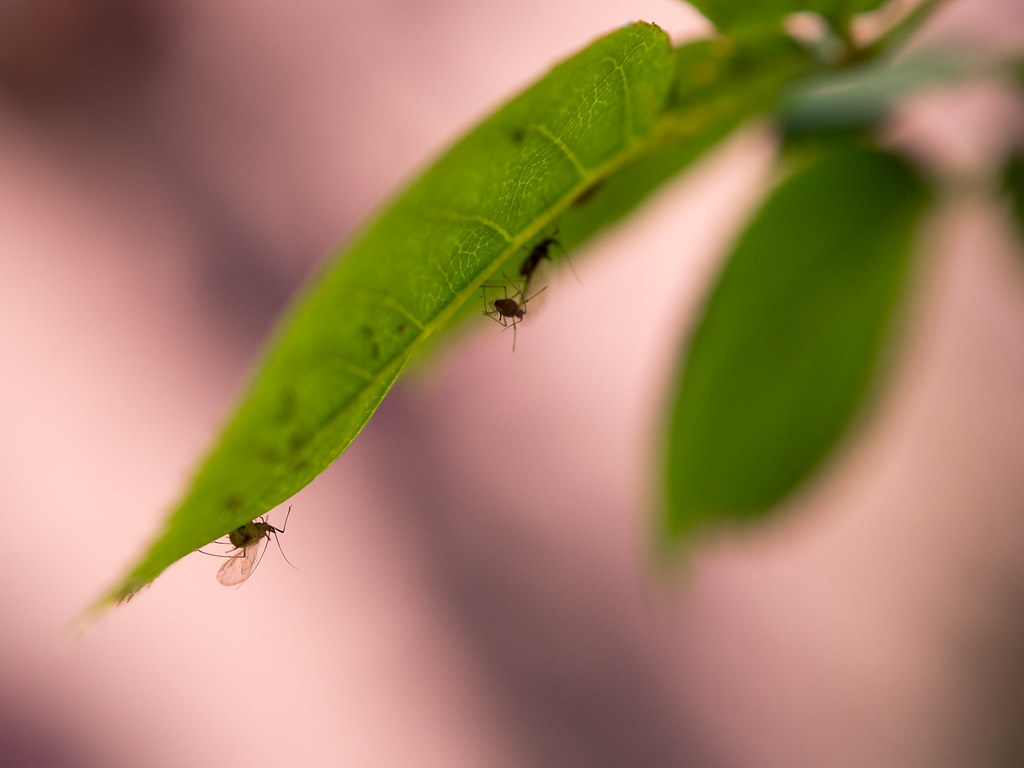
Photo by Ivan Radic, licensed under CC BY 2.0
Every indoor grower eventually finds something they didn't plant: tiny flies hovering over the soil, fine webbing between leaves, or a sticky residue on a windowsill. Indoor pests thrive precisely because indoor conditions are stable and predator-free — no birds, no ladybugs, no hard freeze to reset the population. The good news is that the handful of pests that show up again and again in grow tents and houseplant collections are all manageable without reaching for anything harsh, as long as you catch them early and treat consistently.
Quick Pest Identification Table
| What you're seeing | Likely pest | Fastest natural fix |
|---|---|---|
| Small flies hovering over soil, worse after watering | Fungus gnats | Let soil surface dry out; yellow sticky traps |
| Fine speckling on leaves, faint webbing on undersides | Spider mites | Increase humidity/airflow; neem oil |
| White, cottony clusters in leaf joints and stem nodes | Mealybugs | Dab with rubbing alcohol; insecticidal soap |
| Small soft-bodied insects on new growth, sticky residue | Aphids | Rinse under running water; insecticidal soap |
Fungus Gnats: The Most Common Culprit
If you see small, mosquito-like flies weaving around your pots — especially after watering — you've got fungus gnats. The adults are mostly harmless nuisances; the real damage comes from the larvae, which live in the top inch of damp soil and feed on organic matter and fine root hairs.
- Let the soil surface dry out. Fungus gnat larvae can't survive in dry soil. Watering less frequently, and only once the top inch or two is dry to the touch, breaks their life cycle faster than almost anything else you can do.
- Use yellow sticky traps. Adult gnats are drawn to the color and get stuck before they can lay more eggs. Sticky Trapz dual-sided yellow traps pushed into the soil near the stem are a simple, chemical-free way to monitor and reduce the adult population at the same time — the dual-sided adhesive means you don't have to think about which way they face when you push them in.
- Top-dress with sand or fine gravel. A quarter-inch layer of coarse sand on top of the soil dries out fast and makes it a poor place for adults to lay eggs.
Spider Mites: Small, Fast, and Easy to Miss
Spider mites are barely visible to the naked eye, but the damage they leave behind isn't: fine speckling or stippling on leaves, followed by faint webbing on the undersides of leaves and along stems in a bad infestation. They thrive in warm, dry air, which makes grow tents with weak airflow and low humidity a prime target.
- Increase humidity and airflow. Spider mites struggle to reproduce in more humid conditions with decent air movement, so a small circulating fan and a slightly higher humidity target both work against them passively.
- Rinse leaves with water. A firm spray of water on the undersides of leaves, done every few days, physically knocks mites and eggs off the plant. This alone controls light infestations.
- Spray with neem oil. For anything beyond a light infestation, Bonide Neem Max applied to all leaf surfaces (including undersides) every 5-7 days for two to three cycles disrupts the mites' feeding and reproduction without leaving harsh residues behind. It's a concentrate rather than ready-to-spray, so there's some mixing involved, but that also makes it noticeably cheaper per treatment if you're dealing with more than one or two plants.
Always test first: before spraying an entire plant with neem oil, insecticidal soap, or any treatment, test it on one leaf and wait 24 hours. Some plants are sensitive to oil-based sprays, especially in bright light or high heat, and a small test spot saves you from damaging an entire plant.
Mealybugs and Aphids
Mealybugs show up as small clusters of white, cottony fluff tucked into leaf joints and stem nodes. Aphids are small, soft-bodied, and cluster on new growth and flower buds, often leaving a sticky "honeydew" residue behind. Both respond well to the same low-key approach:
- Dab visible mealybug clusters directly with a cotton swab dipped in rubbing alcohol — this kills them on contact without spraying the whole plant.
- For broader infestations of either pest, Garden Safe Brand Insecticidal Soap breaks down their protective waxy coating and is gentle enough to use on most houseplants and vegetables without leaving a harsh residue — it comes ready-to-use, which is worth the small premium over a concentrate if you just want to grab a bottle and spray without mixing anything.
- Rinse plants under lukewarm running water every couple of weeks as routine maintenance — this alone keeps light aphid and mealybug populations from ever getting a foothold.
Prevention Beats Treatment Every Time
Every pest on this list spreads fastest between plants that are already stressed, overwatered, or crowded too close together. A few habits go a long way:
- Quarantine new plants for a week or two before placing them near your existing collection or tent.
- Avoid letting pots sit in standing water in a saucer or tray.
- Space plants so leaves aren't constantly touching — pests travel leaf to leaf far more easily in a crowded setup.
- Inspect the undersides of leaves regularly, not just the tops — most early infestations start where you're least likely to look.
None of these pests require you to reach for a harsh, broad-spectrum pesticide. Consistency — catching it early, treating on a schedule rather than once, and fixing the underlying moisture or airflow problem — solves the vast majority of indoor pest issues before they ever become a real infestation.
Frequently Asked Questions
What are the tiny flies around my houseplant soil?
Almost certainly fungus gnats. The adults are mostly harmless, but their larvae live in the top inch of damp soil and feed on organic matter and fine root hairs — letting the soil surface dry out between waterings breaks their life cycle fast.
How do I get rid of spider mites naturally?
Increase humidity and airflow, rinse leaf undersides with water every few days for light infestations, and use neem oil every 5-7 days for two to three cycles for anything beyond that.
Is neem oil safe for all houseplants?
Test it on one leaf and wait 24 hours before treating an entire plant. Some plants are sensitive to oil-based sprays, especially in bright light or high heat.
How do I stop pests from spreading between plants?
Quarantine new plants for a week or two before placing them near your existing collection, avoid crowding leaves together, and inspect leaf undersides regularly rather than just the tops.
Do I need harsh chemical pesticides for common houseplant pests?
No. Fungus gnats, spider mites, mealybugs, and aphids are all manageable with sticky traps, rinsing, insecticidal soap, and neem oil, as long as you catch them early and treat consistently.