
Choosing a Grow Tent for Beginners
Last updated: July 11, 2026
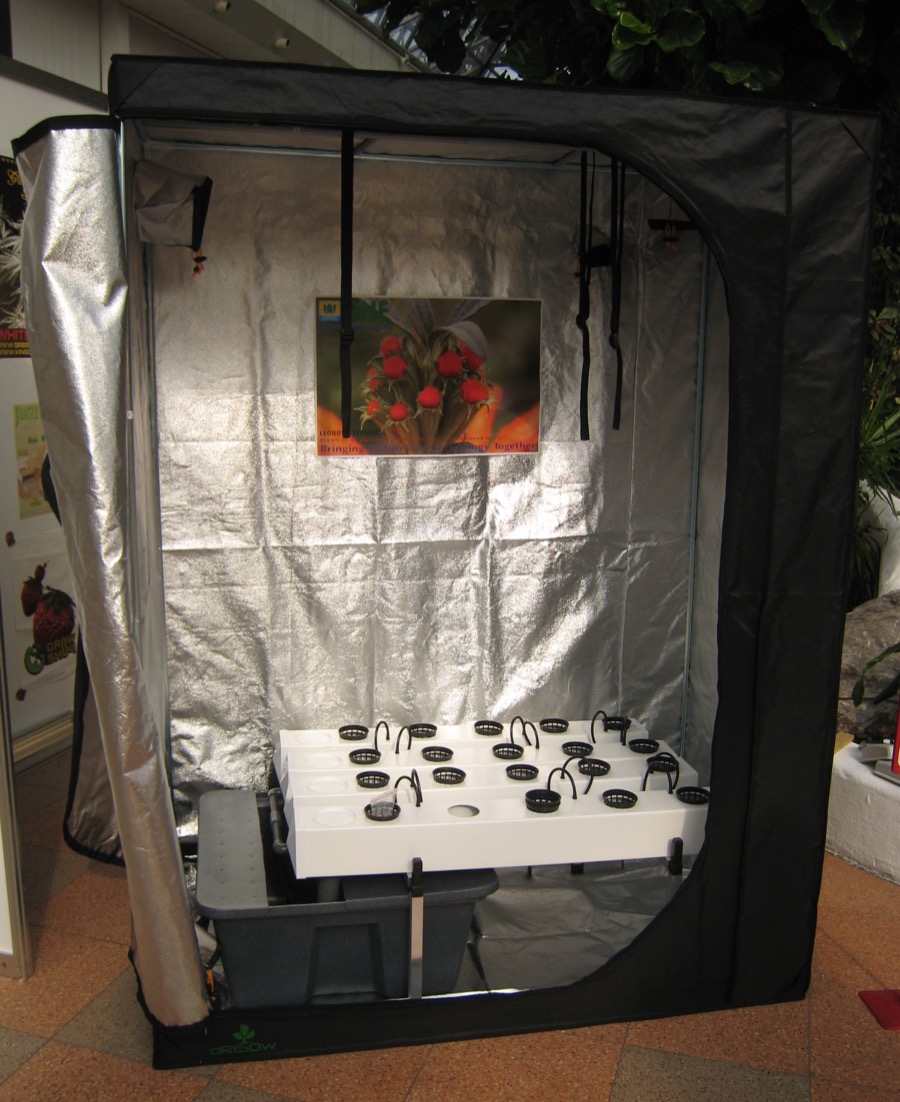
Photo by D-Kuru, licensed under CC BY-SA 3.0
A grow tent is the single piece of equipment that makes indoor gardening manageable in a normal house or apartment. It contains light, controls humidity, keeps pests out, and turns a random corner of a room into a sealed, purpose-built growing environment. But "which tent should I buy" is a harder question than it looks, mostly because the sizing decision has ripple effects on every other piece of equipment you'll buy afterward.
Start With the Space You Actually Have
Before looking at a single tent listing, measure the space where it will live — width, depth, and ceiling height. Then subtract at least 12 inches (30 cm) of headroom above the tent for your light fixture, ducting, and hanging hardware. A tent that "just barely" fits a room, with the light mounted directly against the ceiling, is a common beginner mistake that leads to heat problems and awkward light adjustments later.
Also account for the door swing and any furniture you'll need to access — grow tents need daily attention (watering, checking temperature and humidity, occasional trimming), so leave enough room in front of the tent to comfortably open the flap and work inside.
Common Tent Sizes and What They're Good For
| Size | Good for |
|---|---|
| 2x2 ft (60x60 cm) | A handful of small pots, herbs, seed starting, closet setups |
| 2x4 ft (60x120 cm) | A slightly larger single-shelf setup, still closet-friendly |
| 4x4 ft (120x120 cm) | The most popular all-around size — enough room for a real crop without dominating a room |
| 4x8 ft (120x240 cm) | Serious hobbyists with a dedicated room or garage space |
If this is your first tent, sizing up from a tiny 2x2 tent to something like the AC Infinity Cloudlab 844 4x4 tent is usually the better long-term move, even if you only fill part of it at first — its alloy steel poles and thick canvas are built to carry a full light-and-fan setup without sagging, and the extra room lets you add a second light or better airflow equipment down the line instead of buying a whole new tent. That said, if space or budget is genuinely tight, the VIVOSUN 2x2 grow tent is a solid, budget-friendly starting point for herbs or a few small pots — its 600D fabric and metal poles are plenty sturdy at this smaller size, you're just trading away room to expand later.
Fabric, Poles, and Build Quality
Not all tents are equal on the inside. Look for:
- Reflective interior lining — mylar or a similar reflective material on the inside walls bounces light back onto your plants instead of losing it to the tent walls. Matte white interiors also work but reflect slightly less efficiently.
- Thick, light-proof fabric — cheap tents leak light at the seams and zippers, which can disrupt a plant's light cycle if you're growing anything that needs a strict light/dark schedule.
- Sturdy metal poles — you'll be hanging a light fixture, and often a small fan, from the top bars. Flimsy poles will sag or bow under that weight over time.
- Multiple ventilation ports — look for tents with several round duct ports (usually with drawstring cinches) for intake air, exhaust air, and cable pass-through.
Ventilation Ports Matter More Than People Expect
Even a small light fixture generates heat, and a sealed tent with no airflow will overheat fast. Most decent tents include at least two or three ducting ports sized for a 4-inch or 6-inch inline fan. Plan for one exhaust port near the top (heat rises) and one intake near the bottom. The AC Infinity Cloudline inline fan and carbon filter kit is a popular choice for this because it stays noticeably quieter than cheaper fans at a comparable airflow rating — worth the extra cost if the tent shares a room with people or pets. Whatever you buy, double-check the port diameter matches your fan's duct size before you buy — this is one of the most common "wait, it doesn't fit" returns.
Good to also have on day one:
A BN-LINK 7-day digital outlet timer so your light runs on a consistent schedule without you remembering to flip a switch — it has a battery backup, so a brief power flicker won't reset the schedule — and a ThermoPro TP50 thermometer/hygrometer, an inexpensive way to actually see the temperature and humidity inside the tent instead of guessing.
Floor Trays and Waterproofing
Most tents include a removable, waterproof floor tray — useful for catching spills and runoff, especially with hydroponic setups or hand-watered pots that drain from the bottom. Check that the tray is a separate, removable piece rather than a sewn-in floor; separate trays are far easier to clean and replace if they ever crack.
A Simple Rule of Thumb
If you're unsure between two sizes, size up. An underfilled 4x4 tent is a non-issue — you simply have room to expand. An overfilled 2x2 tent means crowded plants, poor airflow, and a light that's either too close (heat and light stress) or too far (leggy, weak growth) for at least some of what's inside it. Measure your space twice, buy your tent once.
Frequently Asked Questions
What size grow tent should a beginner start with?
For most first-time growers, a 4x4 ft tent is the sweet spot — it holds a real crop without taking over a room, and it's easier to expand later with a second light or better airflow than a 2x2 tent is. If space or budget is tight, a 2x2 tent is a fine starting point for herbs or a few pots.
Do grow tents actually keep smells contained?
A tent alone reduces smell somewhat just by containing air movement, but real odor control comes from pairing the tent with an exhaust fan and carbon filter, not the fabric itself. See our ventilation guide for the full setup.
How much headroom do I need above a grow tent?
Leave at least 12 inches (30 cm) above the tent for your light fixture, ducting, and hanging hardware. Mounting a light flush against the ceiling with no clearance is one of the most common sizing mistakes.
Can I put a grow tent in a bedroom or apartment?
Yes, as long as you have a nearby outlet, floor clearance to open the flap and work inside, and a ventilation plan (intake, exhaust, carbon filter) so heat, humidity, and smell stay under control.
What's the difference between mylar and matte white tent interiors?
Mylar (or a similar reflective film) bounces slightly more light back onto your plants than a matte white interior, though both work fine. Reflective lining is a nice-to-have, not a dealbreaker, at the beginner level.